Published on: November 11, 2025
150 YEARS OF VANDE MATARAM
150 YEARS OF VANDE MATARAM
NEWS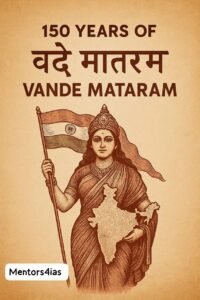
- Prime Minister Narendra Modi launched special commemorative coins and postage stamps in New Delhi to mark 150 years of India’s national song, Vande Mataram.
- The event, held at Indira Gandhi Indoor Stadium, marks the beginning of a year-long national celebration to honour the song’s legacy and its creator, Bankim Chandra Chatterjee.
HIGHLIGHTS
Historical Significance
- Vande Mataram was written by Bankim Chandra Chatterjee in Sanskrit-Bengali and first appeared in his 1882 novel Anandamath.
- The song symbolised resistance against British colonial rule, becoming a rallying cry during India’s freedom struggle.
- It inspired countless revolutionaries and was sung at nationalist gatherings across India.
First Public Rendition
- Rabindranath Tagore gave the first public performance of Vande Mataram at the 1896 Indian National Congress session in Kolkata.
- His rendition transformed it into a unifying anthem of hope, freedom, and national pride.
National Recognition
- On January 24, 1950, the Constituent Assembly declared Vande Mataram as India’s National Song, to be accorded equal honour with Jana Gana Mana.
- Dr. Rajendra Prasad, then President of the Assembly, highlighted its emotional and cultural value in uniting the nation.
150-Year Celebration Activities
- The nationwide programme includes:
- Mass recitals of Vande Mataram in schools, colleges, and public institutions.
- Cultural events showcasing the song’s historical and literary heritage.
- Citizen participation in public gatherings and online campaigns honouring the song’s message of unity.
- The celebrations aim to reignite patriotic spirit and remind citizens of India’s collective identity rooted in freedom and cultural pride.
Contemporary Relevance
- PM Modi emphasised that Vande Mataram continues to embody India’s timeless patriotism and unity in diversity.
- The 150-year commemoration serves as a symbolic bridge between India’s past struggles and its modern aspirations, reaffirming commitment to constitutional values and national integration.