THE ARAVALLIS
THE ARAVALLIS
NEWS – In November 2025, the Supreme Court of India settled a uniform legal definition of the Aravalli hills and paused grant and renewal of fresh mining leases across Delhi, Haryana, Rajasthan and Gujarat.
The order was based on recommendations of the Central Empowered Committee (CEC), recognising the Aravallis as an ecologically fragile and nationally significant landscape.
SIGNIFICANCE OF THE ARAVALLI RANGE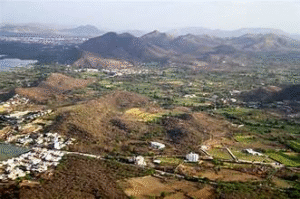
- One of the oldest mountain ranges on Earth (~2 billion years), older than the Himalayas.
- Functions as ecological infrastructure, not merely geological formations.
Key Ecological Roles
- Barrier Against Desertification
- Prevents eastward expansion of the Thar Desert into the Indo-Gangetic plains.
- Protects Haryana, western Uttar Pradesh, Delhi and eastern Rajasthan.
- Hydrological Lifeline
- Fractured rock systems capture monsoon runoff.
- Enable groundwater recharge and sustain rivers such as:
- Chambal
- Sabarmati
- Luni
- Climate Regulator
- Moderates local temperatures.
- Reduces dust storms and air pollution in NCR.
- Enhances rainfall retention and soil moisture.
- Biodiversity & Corridors
- Supports forest ecosystems and wildlife corridors.
- Important for tiger movement routes and regional ecological connectivity.
- Global Environmental Obligations
- Critical for India’s commitments under the UN Convention to Combat Desertification (UNCCD).
ROLE OF ARAVALLIS IN PREVENTING DESERTIFICATION
- Acts as a wind and sand barrier, slowing desert winds.
- Maintains vegetation cover that anchors soil.
- Prevents land degradation and ecological collapse in semi-arid regions.
- Mining-induced disruption accelerates hydrological and climatic instability.
MINING CONCERNS AND JUDICIAL INTERVENTION
Impact of Four Decades of Mining
- Falling groundwater levels
- Air pollution from stone-crushing units
- Habitat loss and fragmentation
- Disruption of aquifer recharge zones
Judicial Timeline
- 2009: SC bans mining in parts of Haryana.
- May 2024: Interim pause on fresh mining leases.
- 2024–25:
- No new leases or renewals.
- Existing mining allowed only under strict regulation.
- 2025: Acceptance of CEC recommendations.
The Court acknowledged that unchecked mining undermines inter-generational equity and environmental rule of law.
WHY A UNIFORM DEFINITION WAS NECESSARY
The Problem
States used inconsistent criteria:
- Elevation in some states
- Slope or revenue records in others
- This ambiguity enabled regulatory loopholes and mining approvals.
SUPREME COURT–APPROVED DEFINITION
📌 All hill formations above 100 metres elevation qualify as Aravalli Hills and Ranges.
Rationale
- Administrative clarity
- Uniform enforcement
- Reduced discretion and misuse
Debate
- Critics: Fear exclusion of hills below 100 m.
- Court’s view: A single, defensible standard is preferable to fragmented definitions that weaken protection.
KEY RECOMMENDATIONS OF THE CENTRAL EMPOWERED COMMITTEE (CEC)
The CEC proposed scientific regulation, not a blanket prohibition.
Major Recommendations
- Scientific mapping of the entire Aravalli range.
- Macro-level Environmental Impact Assessment (EIA).
- Absolute ban on mining in:
- Wildlife corridors
- Water bodies
- Aquifer recharge zones
- Protected forests
- National Capital Region (NCR)
- Regulation of stone-crushing units.
- Mining only after carrying capacity assessment.
- No fresh leases until assessments are completed.
WHY THE SUPREME COURT DID NOT IMPOSE A TOTAL MINING BAN
Judicial Realism
The Court recognised that absolute bans often lead to:
- Illegal mining
- Mining mafias
- Violence and corruption
Adopted Approach
- Strict regulation of existing legal mining
- Scientific zoning:
- No-go zones
- Regulated mining zones
- Restoration and rehabilitation obligations
This reflects the principle of sustainable use, not zero use.
OTHER SUPREME COURT DIRECTIONS
- Preparation of a Management Plan for Sustainable Mining (MPSM).
- Identification of:
- Ecologically sensitive no-go zones
- Regulated extraction areas
- Restoration and rehabilitation measures
- Periodic monitoring and compliance reporting.
WAY FORWARD: ARAVALLI GREEN WALL PROJECT
Launched in June 2025.
Key Features
- 5-km afforestation buffer along the Aravallis.
- Covers 29 districts across 4 states.
- Linked to India’s goal of restoring 26 million hectares of degraded land by 2030.
Success Depends On
- State cooperation
- Monitoring capacity
- Community participation
- Integration with climate and land-use planning
WHY THE ARAVALLIS MATTER MORE THAN WE THINK
The Aravallis are not relic hills — they are living ecological systems.
Their degradation threatens:
- Indo-Gangetic plains
- Groundwater security
- Urban air quality
- India’s climate commitments
For decades, they were treated as mineral warehouses, not ecological insurance.
CONCLUSION
The Supreme Court’s intervention marks a decisive shift:
From
- Ad-hoc permissions
- Fragmented definitions
- Short-term extraction
To
- Science-based governance
- Uniform legal clarity
- Long-term ecological resilience
Protecting the Aravallis is not about saving hills —
it is about safeguarding India’s climate future, water security, and ecological stability.